
Introducing Clarus Metrics
Where meaning holds across boundaries
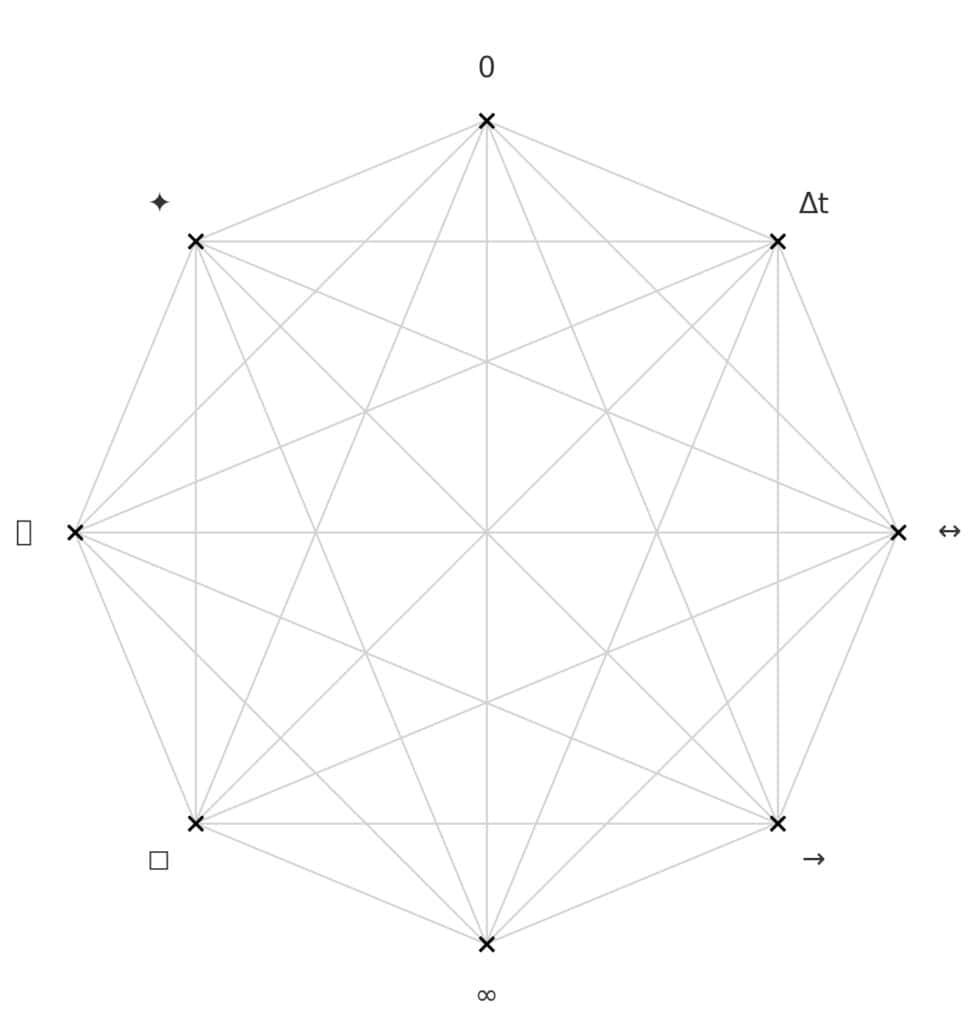
Introducing Clarus Metrics
Where meaning holds across boundaries
You work across models, disciplines, and abstractions.
We ensure your reasoning survives translation.
In high-stakes domains, failure rarely comes from bad data.
It comes from meaning slipping as ideas move between frameworks.
You encounter this when
A variable works in one model and fails in another
A definition shifts without notice
A conclusion stays logical yet loses contact with reality
These failures are subtle.
They appear late.
They waste years.
Clarus Metrics builds tools and protocols to detect these failures
before conclusions harden.
You do not need new models
You need your existing models to remain coherent with each other.
Our work centers on one question
When a concept moves, does it still mean the same thing
If not, the inference is unsound.
What we provide
Audit services
Structured examinations of reasoning chains in research, engineering, and strategy
You see where meaning shifts and where conclusions break
Training and frameworks
Teams learn to identify framework transitions before conclusions drift
This becomes a shared discipline, not a specialist skill
Software tools
Conceptual dependencies are mapped
Correspondence rules are enforced inside workflows
Invalid transfers are blocked at the source
Where this matters
Multi-model AI systems
Long-horizon research programs
Policy design under deep uncertainty
Foundational physics proposals
Clarus Metrics is for people who cross intellectual gaps for a living
and need those crossings to hold.
The Intelligence Invariant
A rule for reasoning across domains without collapse
Intelligence fails when meaning does not survive translation.
Every time a concept moves between frameworks, it carries assumptions.
Most remain hidden.
When those assumptions no longer apply, the conclusion becomes unsound
even when the mathematics is correct
even when the logic is valid
The Intelligence Invariant prevents this.
Statement
A concept may move between frameworks only if its operational meaning remains intact.
Operational meaning includes
How the concept is measured or observed
What background structures it depends on
What remains invariant as context changes
If these do not survive the transition, the transfer is invalid.
Not approximate.
Not risky.
Invalid.
Why this matters
Intelligence depends on stability of meaning.
Without stability, reasoning degrades into unconstrained symbol manipulation.
This is where sophisticated work quietly fails.
How the invariant is enforced
- You declare what a concept depends on
- You test whether those dependencies still exist
- You block the transfer when they do not
- Or you introduce a scoped replacement with explicit limits
What you gain
- Fewer false paradoxes
- Fewer wasted research paths
- Cleaner questions
- Stronger conclusions
This is not theory for its own sake.
It is a working protocol.
It defines when reasoning is permitted
and when it is not.