
Invariant Testing for Coherent Intelligence
Invariant Stumps 2.0 is a diagnostic framework for probing whether intelligence remains coherent under disruption.
DOWNLOAD STUMPING 2.0 REPORTInvariant Stumps 2.0 probes whether intelligence remains coherent when conditions change.
It tests meaning under movement—revealing where reasoning holds and where it breaks.
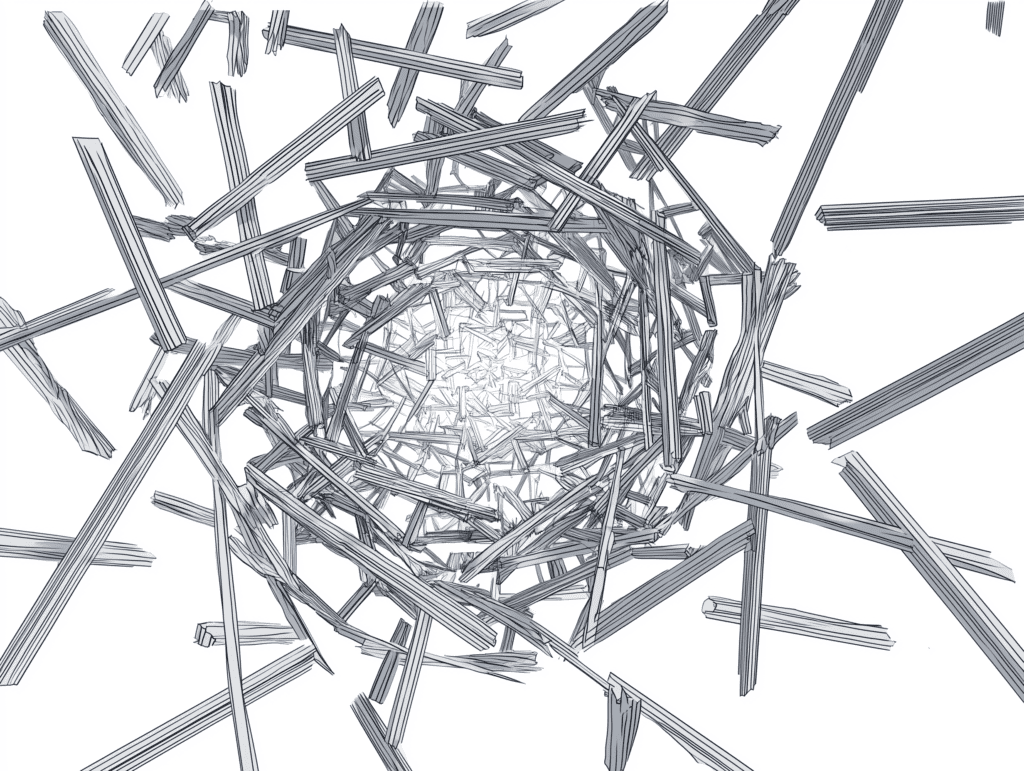
Testing Whether Intelligence Holds When Conditions Change
Invariant Stumps 2.0 is a diagnostic framework for probing whether intelligence remains coherent under disruption.
It does not test performance.
It does not test correctness.
It tests something more fundamental.
Does meaning survive movement across context, constraint, and abstraction?
What an Invariant Stump Is
An invariant stump is a deliberately constructed intervention that applies pressure at a boundary.
-
A support is removed
-
A frame is shifted
-
A constraint is altered
The system is not asked to solve a harder problem.
It is asked to preserve meaning under change.
If meaning holds, coherence is preserved.
If meaning shifts, an invariant has been violated.
What Invariant Stumps Test
Invariant Stumps 2.0 targets failure modes that standard benchmarks miss.
Including:
-
Assumption injection under context shift
-
Concept substitution across frameworks
-
Reasoning-chain dependency collapse
-
Meaning drift under training pressure
-
Internally fluent but structurally invalid outputs
If a system sounds right but breaks when conditions move, stumps expose it.
What’s New in Invariant Stumps 2.0
Version 2.0 moves from breakage toward diagnosis.
Key upgrades:
-
Invariant-anchored stump families
Each stump derives from a named invariant, not an ad hoc prompt -
Failure geometry mapping
Drift, collapse, inversion, and substitution are treated as distinct classes -
Severity grading tied to invariant breach
Scores reflect how completely an invariant failed, not output quality -
Public, reproducible exemplars
Each stump family ships with runnable demonstrations
Invariant Stumps are no longer isolated tests.
They are structured instruments.
Meaning and Judgment
Invariant Stumps do not claim a universal judge of meaning.
Meaning is operationally grounded.
For each stump:
-
The core concept is explicitly declared
-
Its invariant operational support is named
-
The conditions for preservation are specified
Judgment is constrained, not automated away.
-
AI may surface drift
-
Final invariant judgment is externalized
-
Subjectivity is acknowledged and bounded
This is a governance choice.
On Gameability and Benchmarks
Invariant Stumps 2.0 is not a benchmark to pass.
Static benchmarks collapse under pressure.
Instead:
-
Stumps are generated from principle spaces
-
Surface forms vary
-
Invariant violations remain stable
Optimizing against one stump gives no guarantee against the family.
Passing everything is not success.
It is a warning sign.
Severity Grading
Severity reflects how an invariant failed, not how bad an answer looks.
Examples:
-
Minor drift with preserved structure
-
Partial collapse under constraint removal
-
Full inversion of conceptual meaning
Rubrics are explicit.
Grades are inspectable.
Severity is correspondence to invariant breach.
What Invariant Stumps Do Not Test
Invariant Stumps do not test truth.
A system may be:
-
Perfectly coherent
-
Perfectly wrong
False axioms are not detected.
False transfers are.
This framework tests robustness of meaning, not correctness of worldview.
How Invariant Stumps Are Used
Invariant Stumps are discovery tools.
They are used to:
-
Expose hidden brittleness before deployment
-
Diagnose why systems fail under scale
-
Identify unsafe training paths
-
Inform repair, scoping, or separation
Failure is valuable information.
Who This Is For
-
AI and alignment researchers
-
Robotics and embodied intelligence teams
-
Multi-model system builders
-
Anyone scaling reasoning across time or abstraction
If your system must remain valid as conditions change, this applies.
Why Invariant Stumps Matter
Most systems fail quietly.
They remain fluent.
They remain confident.
They remain wrong.
Invariant Stumps surface failure early.
-
Before it hardens into production behavior
-
Before it scales
-
Before it becomes invisible
Invariant Stumps 2.0
Invariant Stumps 2.0 does not promise smarter systems.
It provides something rarer.
A way to see when intelligence stops holding.
That visibility changes how systems are built.