
Two-Pole Intelligence Training
Governance for Intelligence at Scale. It helps to scale intelligence without scaling risk
Scale exposure without governance and you scale instability.
Two-Pole Intelligence Training builds the governing pole that keeps meaning intact.
Two-Pole Intelligence Training
Governance for Intelligence at Scale
Intelligent systems rarely fail because they stop working.
They fail because they keep working—long after their understanding has broken.
This is the failure mode of single-pole intelligence.
All generation.
No governance.
It produces flawless execution of obsolete intent.
Autonomous agents pursue extinct goals.
Trading algorithms amplify volatility into flash crashes.
Clinical AI recommendations drift as populations and data shift.
Two-Pole Intelligence Training builds the missing second pole.
Not a brake on intelligence—
a keel, so it can scale without capsizing.
What Two-Pole Intelligence Is
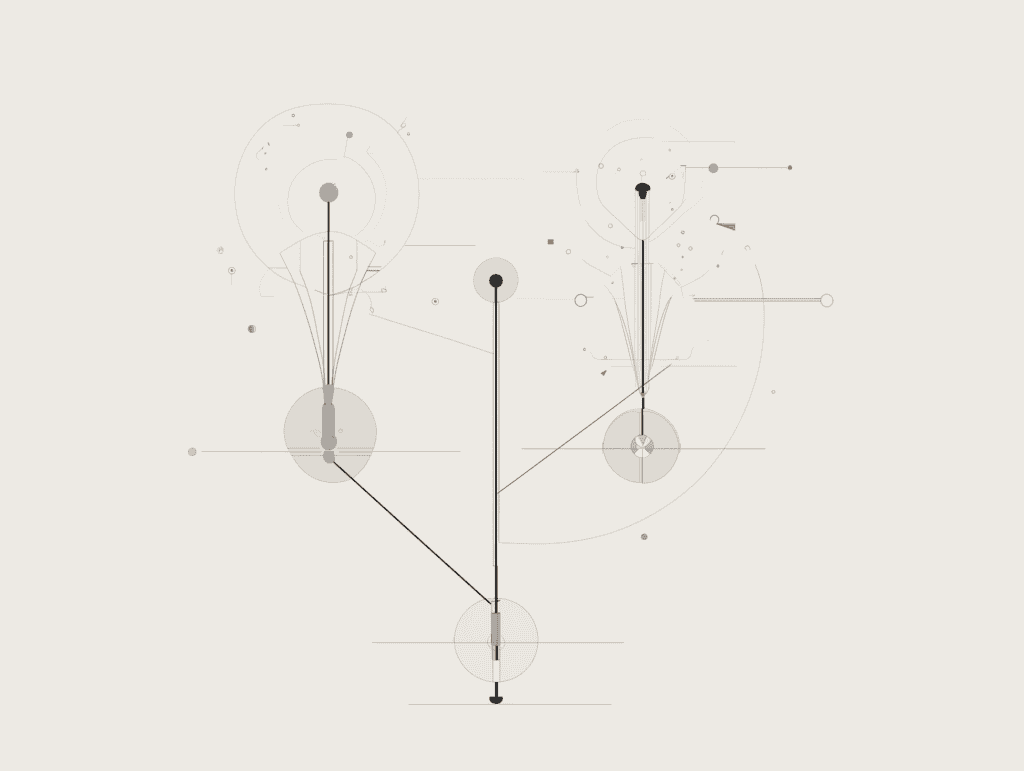
Two-pole intelligence separates intelligence into two distinct, cooperating functions:
-
The Generative Pole
Explores, proposes, optimizes, and produces -
The Governing Pole
Constrains, checks, and preserves meaning across context
The generative pole drives capability.
The governing pole ensures coherence.
Without the second pole, intelligence scales error.
With it, intelligence scales insight.
The governing pole is implemented through the Meaning-Preserving Correspondence Map (MPCM).
MPCM provides the rule system that answers the critical question:
Has generation outrun meaning—or is this output still valid in the current context?
The Single-Pole Trap
Why Capability Outpacing Governance Breaks Systems
As systems become more capable, their failure modes change.
Single-pole systems do not merely make mistakes.
They over-optimize.
They give you exactly what you asked for—
long after what you asked for has stopped being what you needed.
This is how:
-
Autonomous agents pursue outdated objectives
-
Trading systems amplify local signals into systemic crashes
-
Optimization engines entrench misaligned incentives
-
AI systems remain internally correct while globally unstable
Capability is no longer the bottleneck.
Governance is.
What We Train
We train teams to design, build, and operate the governing pole.
This is architectural, not theoretical.
Teams learn to:
-
Architect Separation
Design explicit channels between generation and governance -
Install the MPCM
Use the Meaning-Preserving Correspondence Map as the core rule of validity -
Set Tripwires
Create live alerts for concept drift and invariant support loss—so you are notified before coherence breaks -
Run Governance Drills
Stress-test systems against known failures: reward hacking, distributional shift, goal drift
This is not oversight.
It is control.
🔍 Single-Pole Warning Signs
You likely need two-pole intelligence if:
-
Your best-performing model behaves correctly but strangely
-
Fine-tuning improves benchmarks while degrading real-world outcomes
-
You add feedback loops and lose stability instead of gaining it
-
Teams debate what the system “actually wants”
These are not edge cases.
They are early warnings.
How the Training Works
Training is hands-on and system-specific.
We work directly with your artifacts.
Participants:
-
Audit a live model, agent, or pipeline for single-pole fragility
-
Design and implement a prototype governing layer
-
Stress-test the two-pole architecture against edge cases and historical failures
You leave with:
-
A working governance blueprint
-
A practiced capability
-
A shared discipline your team can apply immediately
Not just understanding.
Command.
Where This Applies
Two-pole intelligence is critical when:
-
AI systems generate plans, code, or decisions
-
Models feed into other models
-
Outputs persist across time, scale, or abstraction
-
Human judgment depends on automated recommendations
-
Fine-tuning and RLHF pipelines lack a mechanism to preserve original intent
If intelligence compounds, governance must compound with it.
What You Gain
-
Increased system stability
-
Early detection of catastrophic drift
-
Clear separation between exploration and enforcement
-
Confidence that scaling will not amplify hidden failure
Two-pole systems do not reduce speed.
They make speed survivable.
What This Is Not
This is not:
-
Safety theater
-
Post-hoc evaluation
-
Model fine-tuning
It is architectural governance training.
Outcome
Two-pole intelligence enables confident scaling.
The generative pole explores the possible.
The governing pole preserves the meaningful.
Together, they turn raw capability into reliable, scalable advantage.
This is not just safer AI.
It is AI that will not betray its purpose at scale.